Ah, the good old days, when TV characters could ask if someone was gay through a simple effeminate, flamboyant gesture meant to resemble of how every gay man ever acts. And for bonus points is David Schwimmer AS Ross Geller. Crossover alert!
Lesson learned: if you admire a sweater worn by someone of the same sex then you’re a big-time homo. Thanks Must See TV!
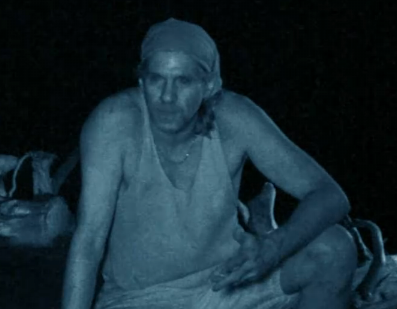
Well, Jimmy T, you got what you wanted last week, ousting TWO TIME SUPER BOWL WINNING NFL COACH Jimmy Johnson, because he was, in your own words “not a Jimmy T fan.” Well, be careful what you wish for Jimmy T, because with Jimmy Johnson out of the picture you sealed your own fate by NOT shutting up about how all you wanted was “one shot” and you just wanted “to be put in there” and see “some game time” and other things you say when you’re 6 years-old and terrible and your t-ball coach rightfully puts you in the outfield. The sports analogies sort of made sense when Jimmy Johnson was still around, but now that he’s gone they’re just plain grating, and pretty much illogical. As was Jimmy T as a whole in this episode, as he failed to grasp that he was digging his own grave, and followed Jimmy J right into the, well, graveyard.
So, Jimmy T, we hardly knew ye. Let’s look back at some of your finer moments:
Expanding on our earlier exposé on last weekend’s “Returns and Exchanges” sketch with Jay Pharoah curiously lingering in the background, we can now compare the broadcast version to the edited clip available on Hulu (the DVR that’s hooked up to our slingbox ran out of space and didn’t record the show, so please forgive this less than ideal screenshot taken with our Droid).
Every era has its own specific genre of TV show, and within that genre there’s a hierarchy: the forerunners, the second-rate but solid middle class and the imitators. For example, in the late ’90s you had shows like Friends and Seinfeld at the forefront of the “good-looking single young people in NY” genre, and then a second tier, with shows like Mad About You, that were good, not great, but still run for over 100 episodes, and then you had outright copycats like The Single Guy and It’s Like…You Know that burn out after one or two seasons. Or in the 1970s (as you can read much more about in the AV Club’s ‘70s Sitcom Primer), you had the top dogs like All in the Family and Mary Tyler Moore, then a second level with series like Maude and Rhoda, and then the bottom rung with shows we’ve never heard of because we’re too young (but possibly including Bridget Loves Birney). Likewise, the late ’80s/early ’90s was the golden age for saccharine, safe, wholesome family sitcoms, a genre which basically dominated the airwaves from about 1986 until Seinfeld and Friends changed the game in the mid-’90s. Your preeminent shows in this era included The Cosby Show, Growing Pains and Full House, who were a cut above other successful shows like Who’s The Boss?, Family Matters and Major Dad; and then you had the bottom layer, cheap xeroxes and flashes in the pan like Baby Talk, Getting By, and Day By Day. Right there, in that second tier – the shows that never set the ratings world on fire, programs that are not looked back on as innovators in the genre, and yet ran for many seasons in first run broadcast and in syndication – you can find The Hogan Family. Premiering in 1986 as Valerie, starring Valerie Harper (of MTM and Rhoda, mentioned above), and morphing into Valerie’s Family and ultimately the Hogan Family after Harper left the show due to creative differences following the second season (killed off via car accident on the show), the show ran for 6 seasons with 110 ten episodes across two networks. It never won any major awards, was never critically acclaimed, and was never atop the Nielsens. And yet it was a staple on NBC for many seasons (paired with ALF, natch), and could be seen for years in reruns on local channels and basic cable networks. Buoyed by Sandy Duncan, who stepped in for Harper as Aunt Sandy (creative!), it was a workhorse; a dependable, middle of the road sitcom that perhaps defines the era. Also, no other show featured Edie McClurg and Willard Scott.
Before he was Michael Bluth, Jason Bateman was David Hogan, and if not for the brilliance of Arrested Development (which couldn’t be further from The Hogan Family on the sitcom scale) that could have been his most memorable role (besides Teen Wolf Too. And this). But The Hogan Family is where he cut his chops (and for which his work as director qualified him as the youngest ever member of the DGA), and you can see a little bit of oldest brother David Hogan in most responsible brother Michael Bluth, both of whom often had to play the father figure in their respective TV families.
Indeed, one could argue that Bateman’s finest work can be found in the Hogan Family episode “Burned Out, as the Hogan clan, still reeling from the loss of their matriarch, must watch helplessly as their house burns down, the result of a rogue lamp in the attic (because that sort of thing happened in those days). Scroll to approximately 6:00 to see Bateman work his magic.
Interesting bit of trivia about this episode, courtesy of Wikipedia:
The episode had a commercial tie-in with the McDonald’s Corporation, who financed the expenses accrued in damaging the set for the fire. As a sponsor that evening, McDonald’s commercials aired promoting fire safety.
Because that makes sense.
McDonald’s, we know we speak for Jason Bateman when we say thank you. Thank you.
And, because it’s somewhat relevant, let us again remind you about Justine Bateman.
We briefly mentioned in our earlier SNL recap the mangled ending to the “Tax Masters” sketch, where it sounded like an open walkie stepped on Fred Armisen’s closing line, so the sketch, and the show went out with a clumsy whimper. However, we neglected to note that this was the second odd conclusion of the night. Earlier, at the end of the “Returns and Exchanges” sketch we could see Jay Pharoah lurking mysteriously in the background after his Denzel Washington retired to the stockroom (thanks to Videogum for reminding us, and for their superior review). The sketch itself had a weird, head scratching ending where Bobby Moynihan’s employee simply says “Who’s next?” Considering the clunky finish, it’s possible that Pharoah was supposed to reappear for an additional line or two, but there was some confusion and instead the sketch ended with Moynihan’s awkward coda. Or, perhaps, Pharaoh simply wanted to watch the end of the sketch, and didn’t realize that he’d be visible in the shot. Unlike the other rookies, Pharoah’s background is in stand-up and impressions, not sketch and improv, so it’s feasible that his inexperience with sketch comedy led to this blunder. This is why, for the near future, we’ll probably see Pharoah mostly as a guest on “Weekend Update,” or in sketches where his characters speak directly to camera.
But, not surprisingly, the show is retroactively erasing the gaffe. If you watch the clip on Hulu, Pharoah is not to be found looming in the background, unsure of where to go. But if you look closely at the right side, you can see that they’ve edited Pharoah out of frame, leaving a small sliver of his black suit jacket and mismatched wainscoting as evidence. Take a look:
Enhance:
BUSTED SNL!
Not surprisingly, they also cleaned up the end of the “Tax Masters” for viral consumption.
Vodpod videos no longer available.
Saturday Night Live? More like Saturday Night We’ll Get It In Post!
Burned.
And, on top of all that, here’s what you didn’t see broadcast:
Vodpod videos no longer available.
You’ve to get up pretty early in the morning to pull one over on a blogger who watches SNL late on Sunday and then writes about it on Monday afternoon.
Sesame Street has long been in the pop culture parody business; in fact that’s basically it’s whole model, come up with concepts that will educate children but also entertain adults. But lately, they’re becoming kings of the genre, with Mad Men, 30 Rock and, most recently, True Blood parodies. And now they’ve moved even further from the mainstream with their version of Old Spice’s “Smell Like a Man” campaign:
Between Grover and Justine Bateman we’re feeling really uncool.
Not that Jane Lynch was sub-par in her first (of hopefully many) outing as host of SNL, quite the contrary, but it’s that, once again, the material failed to live up to the vast talents of the host. It’s confusing, bewildering and frustrating that they keep wasting their resources. Perhaps, as we felt with the Zach Galifianakis show last season, the writing staff is actually less motivated by a talented host; they rely on the host to elevate the material, so what they deliver is second-rate. It’s just a theory, and probably misguided and misinformed, but you also can’t ignore the body of evidence, because, while this week’s show was better than last week, it wasn’t a great improvement. We saw plenty of Jane Lynch (and plenty of wigs), but nothing truly memorable.
[note: not sure if that title will have anything to do with our reaction to last night’s Office. We just liked it.]
Week 3 of the Michael Scott death march brought us “Andy’s Play,” which slots below last week’s Michael Scott – Toby Flenderson tete-a-tete “Counseling” but above the season premiere “Nepotism.” It exhibited many of the symptoms that have plagued the show in recent seasons, but also demonstrated some encouraging signs, some beats that harken back to the show’s roots. Uneven, sure, but with a strong finish. And as some porn star was probably once told, it’s better to finish strong than start strong.





 Jumped The Snark